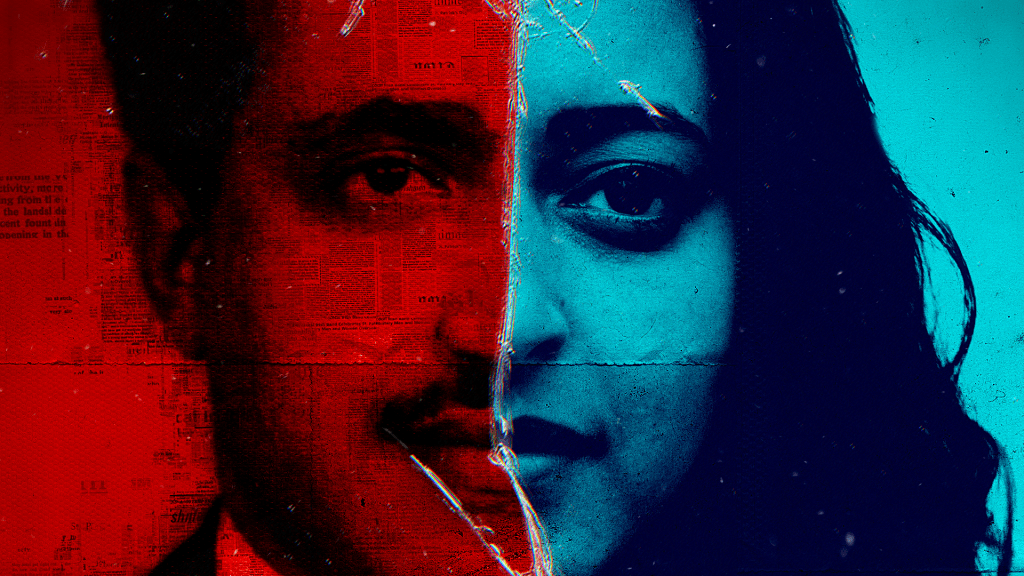
A BBC World Service investigation into the unresolved assassination of Yemen’s foreign minister in 1974. Fifty years later, I his granddaughter, set out to uncover what happened and who might have ordered his murder. I dig through scattered archives, track down long forgotten witnesses and try to reconstruct the moment that changed my family and altered the course my country might have taken. In a country where history is rarely documented and often written by those in power, who gets to tell our stories and how, still matters.
Over the course of a year, I followed every lead I could find. From declassified US state department cables to family diaries and private papers. From police statements buried in old Lebanese files to eyewitnesses who had stayed silent for decades. I travelled between Cairo, Beirut and Aix-en-Provence, piecing together fragments from diplomats, doctors, journalists, soldiers and relatives. Not to prove a single neat theory, but to document, as rigorously as possible, how power, fear and impunity converged around one killing.
In 1974, at a traffic junction in Beirut, a gunman stepped out of a car, raised a pistol fitted with a silencer and fired into another car waiting at the lights. The bullets tore into the driver’s hands and stomach, then into the chest and head of the passenger sitting beside him. The car sped away into the night. By the time the passenger reached hospital, he was dead.
His name was Mohammed Noman. Former foreign minister of North Yemen, political reformer, tireless advocate for democracy and civilian rule. To many, he was one of the brightest hopes for a different Yemeni future. To others, he was a problem that needed to be removed.
He was also my grandfather.
I grew up with his picture on the wall. A handsome man in his thirties, serious eyes, neatly combed hair. His presence hovered over our family home, but he was rarely mentioned. There was no story, no explanation, just a gap. For years I accepted that silence as normal. Only much later did I realise how strange it was that none of us, even his ten grandchildren, really knew who he had been or why he had been killed.
The catalyst came from a stranger. An American anthropologist, Cynthia Myntti, who had lived and worked in Yemen decades ago. One day she heard me on the BBC and sent an email asking if I was “her” Mai. She had known my family when I was a small child. When we met in London a few years ago, she told me she had once planned to write a book about my great grandfather, Ahmed Noman, and described my family in forensic detail. As she spoke, something clicked. If this American academic knew more about my family history than I did, what did that say about what we had buried.

Cynthia described the Nomans as one of the most prominent families in Yemen’s southern highlands. Large landowners with economic and social influence, people others turned to for mediation, advice and healing. My great grandfather, known to everyone as “El Ustad” . the professor . established one of the first modern schools in Yemen and became one of the country’s key reformers. He co founded the Free Yemeni Movement, served twice as prime minister and pushed relentlessly for modernisation, education and the rule of law. He was deeply sceptical of military power and proud of being a pacifist. One paper called him “the Gandhi of Yemen”.
My grandfather Mohammed grew up in that shadow. He lost his mother to typhoid at 11. Soon after, with his father in political exile in Aden, he walked on foot with his brother for a full day to cross the border and join him, careful not to mention their family name in case they were arrested. By 15 he had written his first book on political prisoners. By his early forties he had held several ministerial posts, served as roving ambassador, deputy prime minister and finally foreign minister and presidential adviser. He was his father’s political heir and, crucially, he shared his father’s enemies.

He also shared his bluntness. Friends remember him as brilliant, uncompromising, sometimes intimidating. “He didn’t compromise. Compromise was not in his vocabulary at all,” recalls his friend Abduljalil Nuaman. Others called him “Al Ghawba”, a term that means something like dust devil, a sudden desert whirlwind that darkens the sky and pulls everything into its orbit. “When he came into a meeting, whatever the topic, he became the centre,” Abduljalil says. “He had that kind of courage.”
That courage came at a price. He was one of the few Yemeni politicians of his generation who not only opposed military rule in principle, but also had direct access to leaders and opinion shapers across the Arab world and the West. He met Nasser and King Faisal, spoke at the United Nations, talked to Henry Kissinger. He wanted Yemen to become, in the words of one French journalist, “the Switzerland of the Arab world”. For those invested in authoritarian or military systems, he was a risk, both inside Yemen and beyond it.
The more I dug into his life, the more the silence in my own family stood out. When I called my cousins and siblings, every conversation followed the same pattern. Fondness for the image of him, embarrassment at how little we knew. My brother half jokingly lamented that he never got to learn from his grandfather’s charm with women. My sister admitted she felt ashamed that she knew almost nothing beyond the headlines. Our parents, it seemed, had chosen not to pass down the story.

So I went to the source, sitting with my aunts, uncles, father and grandmother in our family home in Cairo. The mood was warm, but under it I could sense a nervousness. They described a loving but mostly absent father who put his country above everything else, who taught them resilience by not being around to protect them. Then, slowly, they walked me through the days before his murder.
Two weeks before the assassination, there had been a bloodless coup in North Yemen. Colonel Ibrahim al Hamdi and his allies had seized power, turning the young republic into a military regime. My grandfather, who had long argued against military rule, was suddenly out of government. For a week he travelled around the region, talking to Arab leaders about the coup. When he returned to Beirut, where his family was based, the Lebanese president sent security guards to protect his apartment. My grandfather sent them away.
A friend tried to convince him to take a gun. He refused. “I would rather be killed than kill,” he told the friend. This was not fatalism. It was a decision about the kind of man he wanted to be.
My grandmother, who had been largely silent, then said something that stunned me. He had told her that he wished for a quick death. “Oh how lovely it would be to die with a bullet and that is it,” she remembered him saying. My father, sitting next to her, recalled how he had found himself crying while singing a love song about loss shortly before the assassination, overcome by the feeling that he was about to lose someone dear.
On the night he died, my aunt Maha was in the car with him and my grandmother on their way to dinner. A friend, Shakir, was driving. They stopped at the lights in the Beirut neighbourhood of Al Zarif. Another car pulled up beside them. “No one heard the gunshots,” Maha told me. “I thought the glass shattered because they used a silencer.” My grandfather slumped forward. Shakir was hit in the hands and stomach. The attackers sped away. A stranger later jumped into their blood soaked car and drove it to the nearest hospital, saving Shakir’s life. My grandfather was declared dead shortly after arrival.

The Lebanese police did ask questions, but the investigation went nowhere. Witnesses were interrogated then released. One eyewitness I found half a century later still refuses to be identified, traumatised by what the police put him through. The man who shot my grandfather, I later learned from Shakir, was himself killed within a month. That was common practice in political assassinations at the time. The gunman was disposable.
At this point, my search shifted from family history to geopolitics. To understand who might have ordered the hit, I had to travel through the political fault lines of the 1970s. The Cold War had split the Arab world. North Yemen, a fledgling republic backed by Saudi Arabia and the United States. South Yemen, a Marxist state aligned with the Soviet Union. Iraq, under the rising strongman Saddam Hussein, was extending its reach by funding and arming militant factions.

US state department cables, declassified years later and now sitting on Wikileaks, show that Washington was paying attention. One memo notes that Lebanese authorities had detained a member of an Iraqi backed group in possession of silenced pistols around the time of my grandfather’s killing. Another cites my grand uncle, who believed my grandfather’s death was related to a cache of documents exposing alleged Iraqi involvement in plotting a coup in North Yemen.
It is a neat theory. My grandfather, armed with evidence of Iraqi meddling, was removed before he could use it. A regional expert I spoke to told me that the use of a silencer indicated a high level, probably state backed operation. Saddam’s network certainly had both the capacity and the willingness to carry out such killings on his behalf.
But nothing in this story is that tidy. A former Yemeni general from that period argued the opposite. In his view, the talk of Iraqi plots was itself a decoy, invented by the Yemeni officers behind the real coup to distract from their own role. Others pointed to South Yemen, whose leadership resented my grandfather for renewing a border treaty with Saudi Arabia that they saw as a historic humiliation.
Then there is Ibrahim al Hamdi, the new president of North Yemen. My great grandfather’s diary records a phone call from the minister of interior four days after the coup, complaining on behalf of Hamdi about my grandfather’s media appearances. Hamdi clearly saw him as a threat. Yet he also had a reputation as a reformer who preferred bloodless moves and, as US diplomats observed, often avoided direct violence. He too was later assassinated, in another killing that has never been solved.

In the end, what emerges is not a single culprit but a triangle of overlapping interests. Iraq, North Yemen, South Yemen. All saw my grandfather as an obstacle. As veteran Yemeni journalist Abdul Bari Taher put it to me, his assassination was “a common objective” for them. In a region where political killings are routinely buried under layers of fear, pragmatism and shared guilt, that is probably as close to an answer as I will get.
The depressing truth is that my grandfather’s case is not unusual. Lebanon alone has seen more than a hundred political assassinations in recent decades with barely any solved. When I met the sister of the Lebanese intellectual Lokman Slim, who was murdered in 2021, she put it bluntly. “When you do not have real accountability, it is a cycle,” she said. “I kill, I am protected.” She rejected the idea that it is better to forget. “I am against forgetting,” she told me. “A killer should say I killed, then apologise. I need this apology before keeping on living in this country.”

I have not had that apology. I probably never will. Most of the people who knew the truth about my grandfather’s death are gone. The archives we would need in Yemen, Lebanon and Iraq are missing, destroyed or never created. What remains are fragments, hints and the echo of a man whose life shaped his country, his family and, in an indirect way, my own.
Over the year I spent investigating, my grandfather shifted in my mind. From a black and white photograph on the wall to a three dimensional human being. An impatient young boy trudging across a border on foot. A principled politician who preferred being shot to carrying a gun. A father who loved his children but chose his country again and again. A son whose own father wrote to him, forty days after his funeral, that if he wanted to cry blood, he could, but that there was a greater need for patience.
I understand now why my family stayed silent. The pain, the rage, then the resignation required just to keep going. I do not share their silence. I cannot. I may never be able to write the final line in the story of who killed my grandfather. But I can refuse to let his killing sink quietly into the region’s long list of unsolved crimes. Asking the question is not nothing. In a place where impunity is the rule, asking is its own form of defiance.
Link to the podcast
Link to the film